Search

GET MOVING!

Injury prevention, recovery tips, and orthopedic insights — stay informed with OrthoConnecticut’s blog.

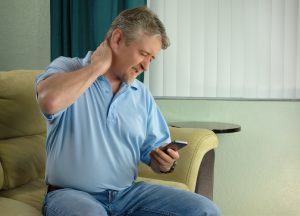
Man experiencing Text Neck discomfort

Text Neck, It’s a Real Thing!

Neck Pain? Texting too much at the wrong angle (15 to 60 degrees forward) for too long can lead to “Text Neck”. Also called “Tech Neck”, it’s a real, modern-age issue of neck muscle pain, headaches, and potentially “dowagers” hump. Less common symptoms are numbness, weakness, balance issues, and jaw pain. Adults have it. Children are now developing it, and worse still, it may impact how young bodies’ grow and develop – leading to prolonged neck, shoulder, curving of the spine, and low-back issues. Holding phones and mobile devices at different angles is linked to pounds of downward pressure exerted on the neck. Studies have shown how holding the phone at different angles varies this pressure: So, what can we do to prevent pain and inflammation associated with texting, or treat it if you already have it? Wear proper footwear. Athletic shoes or rubber soled shoes are preferred. Don’t wear sandals, open-toed shoes or shoes with slippery soles. Look for good traction. Watch out for long cords, toys, throw rugs, and other objects on the floor. Avoid wet floors and let your family members know when a floor was just mopped. OrthoConnecticut Can Help Our physicians and physician assistants are available to help you if you’re experiencing text neck or other spinal issues. Contact us today for an appointment and #getmovingCT.
Read More ›
Teacher and active senior women yoga class on chairs

Resolved to Exercise … Next Steps

 Anytime is a perfect time to make a resolution including moving more through exercise. Make an exercise plan that includes small, achievable goals that encourage and motivate you as you succeed. It takes 90 days to build a habit, so be sure to add the critical ingredient of patience to your mix of planning and activity. And be sure to include an attitude of flexibility, and adapt and change your exercise routines to keep them fresh and motivating. Combining different types of activities, such as Pilates with running, or yoga with cycling, can help you maximize muscle strengthening while bolstering your commitment. Here are some thoughts to consider. OrthoConnecticut Can Help Our physicians and physician assistants are available to help you if you need assistance with your exercise plan, getting advice for orthopedic or musculoskeletal limitations, or if you’ve injured yourself. Contact us today for an appointment and #getmovingCT.

Read More ›
Group of women in a yoga class, using blocks to assist in pose

De-stress with a gentle yoga practice

De-stress this holiday season with a gentle yoga practice  Practicing yoga can be a great way to get exercise and stay calm during the stressful holiday season. A consistent yoga practice has so many incredible benefits, including reducing heart rate, lowering blood pressure, reducing anxiety and depressive tendencies, and easing back pain — not to mention the stretching and muscle strengthening benefits to the body. Understanding Joint Anatomy Yoga uses every muscle and joint of the body. One key thing to remember is that each joint functions differently. For example, the knee is a hinge joint, meaning it allows the leg to extend and bend back and forth with minimal side-to-side motion. Its motion during yoga should remain within the natural back and forth movement of this “hinge”. The hip, on the other hand, has a unique anatomy which enables it to be both extremely strong and amazingly flexible, so it can bear body weight AND allow for a wide range of movement. The hip joint allows the leg to move back and forth (flexion and extension), out to the side (abduction) and inward toward the other leg (adduction). It also enables rotation, allowing us to point our toes inward (internal rotation) or outward (external rotation) and moving the straight leg in the direction of the toes. OrthoConnecticut recommends a few tips to as you enjoy your yoga practice this season: OrthoConnecticut Can Help Our physicians and physician assistants are available to help you if you’ve injured yourself this holiday season. Contact us today for an appointment and #getmovingCT.

Read More ›
mature couple raking autumn leaves in yard

Tips to Avoid Back Pain During Leaf Clean-Up

Fall in New England is synonymous with beautiful changing leaves, but it also a time for yard work, slippery leaves, and avoiding ticks. Here are some tips from OrthoConnecticut to protect you during leaf season. OrthoConnecticut Can Help Our physicians and physician assistants are available to help you if you’ve strained your muscles or back during Fall Leaf Season. Contact us today for an appointment and #getmovingCT.

Read More ›
Arthritic seniors hands cutting flowers

Tips to help with Osteoarthritis

Nine tips to help with Osteoarthritis If you’re middle-aged or older, it’s likely you have some Osteoarthritis in your hands, fingers, hips, knees, feet or spine. The most common form of arthritis, Osteoarthritis occurs when cartilage between joints and bone gradually wears away causing joint swelling, pain, stiffness, deformity, and reduced range of motion. Most often X-rays are used to diagnose and assess the amount of joint loss, or other issues that can occur like thinning bone, reduced joint space, joint fluid, or bone spurs. If you have osteoarthritis, here are some options your orthopedist might recommend. If you’re in pain, seek treatment and get help! Nonsurgical treatment for joint mobility, strength and pain relief can include: OrthoConnecticut recommends you consult your orthopedist surgeon for advice on surgical options, which might include: OrthoConnecticut Can Help Our physicians and physician assistants are available to diagnose and advise you on the best ways to treat your Osteoarthritis. Contact us today for an appointment and #getmovingCT.
Read More ›
Schoolgirl baseball team in a team huddle with their coach

Girls and Sports

Girls and Sports is a Win-Win  Girls participating in sports is a win-win that stretches far beyond known physical aerobic benefits. Being part of a team encourages cooperation, self-reliance, confidence/self-esteem, friendships, adventure, fun, health benefits and the joy of movement and teamwork that carries into adult life. Are there obstacles? Yes! There are fewer obstacles because of Title IX, but disincentives such as cost, access, and “throws like a girl” comments still exist. Even so, the benefits certainly outweigh them. What are some of the benefits? According to momsTEAM, a trusted source for parents, sports benefits girls in many ways including getting through the trials of adolescence: Tips to keep girls in the game as they grow into adulthood OrthoConnecticut & OrthoCare Express Can Help Our physicians and physician assistants are available to advise on sports safety. We know accidents happen, that’s why walk-in orthopedic specialist care is available 7-days a week at our urgent care service, OrthoCare Express. Download our vCard so the contact information is already in your address book, should an emergency happen.

Read More ›
Close up of woman leg with pain - long driving on the way.

Managing Knee Pain When Driving and Traveling

10 Tips for Managing Knee Pain When You Travel Knee pain while traveling is common, but if you’re prepared you don’t have to be sidelined. What Causes Knee Pain While Traveling? Sitting in tight, no-room-to-stretch airline seats, bouncing trains or buses, and sitting in one position in a car for too long can exacerbate pre-existing knee conditions or create knee stiffness and muscular cramping. Whether it’s arthritis, runner’s knee, kneecap, meniscus, ligament, or other knee conditions causing you discomfort, employing these helpful strategies can reduce or eliminate knee pain while traveling. Strategies to Manage Knee Pain When Driving Tips to Prepare for Travel Tips for Treating Knee Pain Post-Travel OrthoConnecticut Can Help Our physicians and physician assistants are available for travel consults in advance of your journey. Contact us today for an appointment and enjoy a safe and wonderful trip!

Read More ›
Lacross-girls

Youth Sports Injuries

Today’s Youth Sports Injuries and How to Keep Up By Dr. Joshua B. Frank, OrthoConnecticut  Over the years we have learned a tremendous amount about sports, physiology, bio-mechanics, and technique. This advancement in knowledge has allowed athletes to become faster, stronger, quicker, and more efficient. Sports medicine has advanced concurrently, and there has been a particular focus on youth athletes. Sports injures can be thought of in two categories: acute and sub-acute, or chronic injuries.

Read More ›
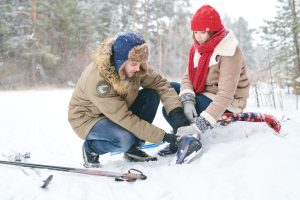
ski injury

Skiing Injury Prevention

Preparing for injuries can help prevent or minimize common snow skiing-related injuries and help you to avoid hospital, doctor’s offices and emergency room visits and costs.

Read More ›
Living in a digital world

De Quervain’s Tendonitis: What It Is & How It’s Treated

By Michael G. Soojian, M.D., Hand & Upper Extremity Surgeon What is De Quervain’s Tendonitis? If you are experiencing a shooting pain from your wrist into your thumb, you may be suffering from a common form of tendonitis called de Quervain’s tendonitis. This condition gets its name from Dr Fritz de Quervain who first described it in 1895, and is often referred to by other names such as texting thumb, gamer’s thumb, and mother’s wrist. Anatomically, two separate tendons start in the forearm and pass through a small sheath or tunnel as they cross the wrist, before they attach to the thumb. Repetitive movements can cause these tendons to experience friction and lead to a build-up of inflammation within this sheath, which manifests as pain, swelling and a feeling of weakness with routine daily activities.

Read More ›
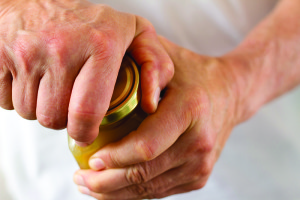
Strong Male Hands Twisting a Stubborn Jar Lid

Osteoarthritis (OA)

By Lisa M. Cyr, OTD, OTR/L, CHT – Occupational Therapist / Hand Therapist, OrthoConnecticut OSTEOARTHRITIS (OA) is one of the most common joint disorders and is one of the leading causes of disability in the United States. It affects as many as 12% of the American population over 25. One in 4 women and at least 1 in 12 men will suffer from the pain and loss of function caused by osteoarthritis (OA) of the carpometacarpal joint (CMC) of the thumb during their lifetimes. When the smooth cartilage covering the ends of the bones in the thumb wears away, the bones rub against each other, causing friction and damage to the bones and the CMC joint. This can cause severe pain, swelling, and decreased strength and range of motion, making it difficult to do simple daily tasks. This may lead to loss of function, depression and decreased quality of life, causing many people to ultimately seek surgical intervention for relief. There are many potential causes for arthritis at the base of the thumb. Since the thumb is involved in at least 40% – 50% of every task that we do with our hands, it is subjected to many forces and strains throughout each day. Each time we pinch something between the fingertip and thumb tip, there is up to 25 times more force at the CMC joint than at the tip! Straining to open a new jar, holding a pen tightly when writing, buttoning tight buttons, pulling tight weeds, twisting a key in a stiff lock, trying to pull open a new bag of cereal or chips, holding pliers or other tools or overly large cups are all examples of ways we repeatedly strain our thumbs each day. Texting, with its repeated thumb motion, can irritate an already inflamed CMC

Read More ›
Randolph J. Sealey, M.D. | Foot & Ankle Specialist and Foot & Ankle Surgeon at OrthoConnecticut

Foot & Ankle Fractures

Keeping You Moving: Foot & Ankle Fractures Story by Randolph Sealey, M.D., Foot & Ankle Surgeon, OrthoConnecticut One of the injuries that I see increase in frequency during the winter months are foot and ankle fractures. The slippery conditions can trigger a fall, which is the usual cause of these injuries. Not only do falls occur during snowstorms or ice storms, but the snow or ice that gets left behind on sidewalks and parking lots will often result in twisting injuries around the foot and ankle that can lead to fractures. Winter sports such as skiing, snowboarding, and ice skating also predispose patients to foot and ankle fractures. In fact, something called a “snowboarder’s fracture” is a specific injury that happens because of the position of the foot and ankle on a snowboard.

Read More ›
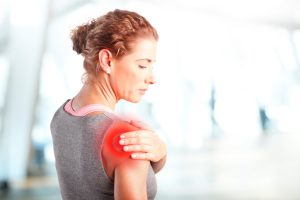
woman holding her shoulder to display shoulder pain

Preventing Shoulder Injuries

Many of the patients I see with shoulder pain have injured themselves as the result of strenuous, weight-bearing exercise. As high impact, strength-related exercise programs have increased in popularity, many people are putting too much weight on their shoulder joints. While the benefits of exercise are indisputable, it is important to understand how the shoulder works and how best to avoid injuring this delicate joint. The shoulder is built for range of motion rather than stability. It is a ball-and-socket joint held in place by a thin sleeve of muscles and tendons called the rotator cuff. Excessive weight on the shoulder can damage the cuff as well as other soft tissues around the joint. Exercise programs that work the large chest and back muscles should also include exercises with light weight or elastic bands for the smaller rotator cuff muscles. If you feel shoulder pain when exercising or playing sports, DO NOT WORK THROUGH THE PAIN. Rest your shoulder for two weeks and take over-the-counter anti-inflammatory medication such as ibuprofen, if necessary. If, after two weeks, you return to your activity and still feel pain, you should consult an orthopedist. Repetitive or continuous use of the shoulder at a young age can lead to injury. Children under the age of 16 should avoid playing any single sport for more than 8 months of the year, especially swimming, baseball or tennis, to prevent shoulder overuse. Heavy weight training is also a potential cause of injury. OrthoConnecticut, a member practice of OrthoConnecticut, offers an expert group of orthopedic specialists, including a team of sports medicine doctors who work with sports-related injuries and conditions of all kinds. The practice has its own x-ray, MRI and on-site physical therapy specialists, allowing patients to recover in one single, integrated location. All the practice’s physicians are

Read More ›
woman playing tennis

Tennis Elbow

By Paul D. Protomastro, M.D. Hand & Upper Extremity Surgeon, OrthoConnecticut TENNIS AND GOLFER’S elbow are common orthopaedic conditions that lead to pain, weakness and disfunction of the elbow. Both conditions actually represent tears of the forearm tendons off of the humerus bone at the elbow. A tear on the outside (lateral) part of the elbow is known as Tennis elbow. A tear on the inside is known as golfer’s elbow. The muscles involved in this condition help to extend (tennis) and flex (golfer’s) the wrist. With both disorders there is degeneration of the tendon attachment usually following repetitive grasp or lifting activities and subsequent weakening of the anchor site leading to tendon detachment. Patients usually experience the insidious onset of elbow pain associated with activities in which this muscle is active, such as lifting, gripping, and/or grasping. Sports such as tennis, golf and weight training are common causes. The problem can occur with many different types of activities such as home renovation and gardening.

Read More ›
hip replacement

The Hip Replacement Benefits of New Approaches

Today’s Hip Replacements Have Shorter Recovery Times and Longer-Lasting Results If you suffer from persistent hip pain due to osteoarthritis, rheumatoid arthritis, an injury, or joint deterioration, a hip replacement could both relieve pain and improve mobility. During the procedure, your damaged hip joint is replaced with implants that recreate the ball and socket of a healthy hip. Most patients can return to an active lifestyle after hip replacement, often becoming more mobile than they had been for years while suffering from hip pain.

Read More ›
man skiing

Preventing Winter Sport Injuries

How Do You Prevent Winter Sports Injuries? The Pros at OrthoConnecticut Give Tips Winter is the time some sports enthusiasts look forward to enjoying skiing, ice skating, snowboarding and more. However, winter is also when orthopedists see many injuries related to those very sports.

Read More ›
WCOSC Surgical Center Staff

Patients point to an attentive staff as major advantages

Recent patients point to an attentive staff and immediate return to home as major advantages DANBURY, CT – For decades, word of mouth advice has been important in the health care field, where people advise family and friends on their personal experiences, both good and bad, about practitioners, procedures, and results. That communication has been a key influence for many years on how people choose their care. So when the Western Connecticut Orthopedic Surgical Center’s (WCOSC) Total Joint patients stepped forward to talk about WCOSC, their voices were especially audible and noteworthy.

Read More ›
family runners

Running Right to Avoid Common Injuries

Running Right – to Avoid Common Injuries Story by Ross Henshaw, MD, Sports Medicine Specialist, OrthoConnecticut DANBURY, CT – As any runner will tell you, this simple sport is one of the most rewarding and convenient exercise activities. It’s a wonderfully efficient way to improve your health, except when it produces chronic, nagging injuries. So what’s the best way to safely enjoy a running program? Start smart, with a progressive training schedule that gradually builds the intensity and duration of your workouts.

Read More ›