Your comeback story starts here.
Learn how our patients returned to active lives after suffering injuries and other orthopedic conditions.
Patient Success Stories
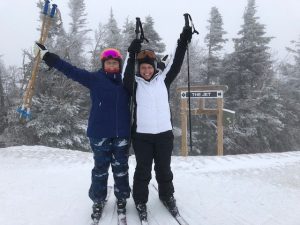
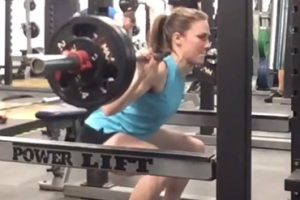
Jeanne Burns, an athletic and active woman in her early 40’s, began having pain in her hips which grew worse over a year’s time. She had to give up running marathons, and as the pain worsened, had to eliminate skiing in the winter, as well as other favorite athletic pursuits throughout the year.
J. Burns | 40's Total Hip ReplacementChronic Hip Pain For 1+ Years After Treatment
Return to Sports
Athlete Returns to Sports After Bilateral Total Hip Replacement
The condition: Jeanne Burns, an athletic and active woman in her early 40’s, began having pain in her hips which grew worse over a year’s time. She had to give up running marathons, and as the pain worsened, had to eliminate skiing in the winter, as well as other favorite athletic pursuits throughout the year.
Since Jeanne’s mother had undergone double hip replacement in recent years, she knew her condition was probably hereditary. She made an appointment with Dr. Robert Deveney, a specialist in total hip replacement surgery, who had successfully treated her mother. Dr. Deveney had used the Mako robotic-assisted surgical technique for Jeanne’s mother’s surgery and was able to eliminate her hip pain, so Jeanne was eager to inquire if this procedure would be recommended for her own condition.
The treatment: Upon examination and x-ray, Dr. Deveney determined that Jeanne had developmental dysplasia of the hips, a condition one is born with that impacts the architecture of the hips. Most people aren’t aware they have it until they begin developing pain in their 40’s. In addition to the pain, hip dysplasia is associated with a high risk of developing arthritis as one ages.
Dr. Deveney recommended a similar robotic-assisted procedure for Jeanne to address her hip pain, and scheduled her two hip replacement surgeries six weeks apart.
“Jeanne was a great candidate for the Mako robotic-assisted surgery technique. Robotic surgery allows the surgeon to design and plan joint replacement surgery in a way never done before.” Dr. Deveney explains. A pre-operative CT scan provides a 3-D image of the joint, enabling the surgeon to determine the exact size and position of the replacement optimal for the patient.
Drew Martin knew the moment he felt a pop in his knee during a Friday night football game that the injury was serious. Soon after, his knee swelled up and he experienced severe pain and...
D. Martin | 22 ACL RepairFootball Game Injury After Treatment
Return to Sports
Torn ACL Halts Game Play But Not Spirits
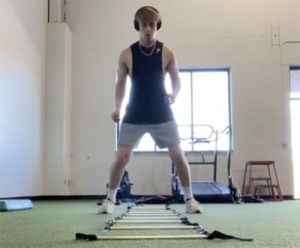
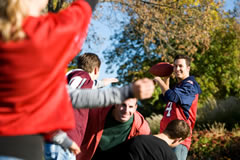
The condition: Drew Martin knew the moment he felt a pop in his knee during a Friday night football game that the injury was serious. Soon after, his knee swelled up and he experienced severe pain and could not put weight on his leg.
However, so many friends and family members recommended Dr. Ciminiello at OrthoConnecticut that the three-sport high school athlete felt he was going to the best possible doctor to help him recover. After his first appointment, he felt even better. “Dr. Ciminiello made me feel so comfortable, and I trusted I’d be getting the right course of treatment. He played college baseball so he understands athletes, which made me feel like he understood what I was going through,” Drew explains.
The treatment: After an evaluation and tests, Dr. Ciminiello determined that Drew had torn both his ACL and meniscus, and sprained his MCL. Drew underwent surgery to repair the tears within a month. “I felt lucky that, even with Covid, I was able to have my surgery scheduled very quickly,” Drew adds, noting that other friends with similar injuries had to wait months to have surgery at other practices.
While the surgery was successful, Drew admits the first few weeks after were difficult because he was unable to stand. “Just sitting around was so hard for me” he recalls. Within two weeks he could get around on crutches and return to school, and after five weeks he was able to begin physical therapy at Motion Physical Therapy, located at OrthoConnecticut’s Riverview office. “Having my PT at the same place was really useful,” Drew explains, adding that it made communications between Dr. Ciminiello and the therapist very easy.
The result: While the typical timeline for an injury like Drew’s is 9-12 months of bi-weekly PT with daily home exercises to return to full function, Drew is determined to cut that down to six months. He is progressing much faster than expected, and can now run after just four months. This is due to both his diligence at PT, as well as his determination to participate in the last part of his senior year baseball season.
“A big part of my recovery has been mind set,” Drew admits. “Dr. Ciminiello explained to me early on that going slowly will be hard for someone like me, and it will be tough to see my teammates continue to play while I’m on the sidelines. He had me focus on the bigger picture, which has really helped me in my recovery.” He adds that setting weekly goals during PT has really helped. “You see results and it’s the best feeling.”
Dr. Ciminiello agrees with Drew about mindset during recovery. “For a young, healthy athlete, the hardest part of recovery from an injury is understanding that it will take some time and can’t be rushed so you can heal properly. Drew’s ability to set small goals and stay positive has significantly contributed to his amazing recovery.”
I’ve long believed that everyone has 11 skills in life. Whether it be gardening, running, navigating an estate sale or finding a new shortcut we all have a few identifiable things that we’re just better at than most other people. Along with those skills, however, is the other side of the coin where we either...
W. Bacas | 63 ACL RepairBasketball Game Injury After Treatment
Return to Active Lifestyle
Dr. Ciminiello and the Achilles Comeback!
I’ve long believed that everyone has 11 skills in life. Whether it be gardening, running, navigating an estate sale or finding a new shortcut we all have a few identifiable things that we’re just better at than most other people. Along with those skills, however, is the other side of the coin where we either just don’t get it or aren’t built to be as good at something as other people. Personally, a few of my skills are working a grill, hitting long irons out of the rough, and public speaking. On the other side, my Achilles heel is…well, my Achilles heel.
I’ve played basketball my entire life and have easily logged thousands of hours on a basketball court. In 2002 I was in a game that was completely indistinguishable from any other, except at one point I pivoted and collapsed, blowing out my right Achilles tendon. The full tear was the complete “window shade” effect – a description as accurate as it is wince-inducing. I had surgery a few days later, and an incision was made at my heel and then they simply cut up the back of my leg until they found the other, rolled-up piece of the tendon. It was pulled it down, the two pieces were tied back together and I was stitched back up. The cast and staples were removed from the 10” incision several weeks later, and after a few months of medication and rehab I was back to 70% of my old self in about 8 months and was happy with the progress. I was careful to avoid any quick-twitch or explosive activities (tennis, basketball, etc.) for at least another year as much out of fear as anything else. There’s no doubt that between the injury, the rehab and the length of time it took to recover the it was both the most physically painful and emotionally frustrating thing I’d ever experienced….
Which made it exceptionally difficult when I blew out my other Achilles tendon 16 years later. For better or worse I was a very informed patient and knew the road ahead, so when I visited the team at OrthoConnecticut I could be as conversational as I was curious. I had the accidental pleasure of meeting Dr. Angelo Ciminiello in February when he confirmed the full tendon tear and that surgery would be the best remedy, both of which I knew were coming. But somehow that’s also when everything completely changed. He described a new procedure for Achilles repair – “percutaneous surgery” – and that it was significantly different than the process I went through previously. He described a small lateral incision and a couple anchors in my heel. The wounded area wouldn’t be invaded and everything would be done under the skin (“percutaneous”). I agreed and had the surgery on March 1 with the goal of walking comfortably on my own by June 15.
I was walking on my own by April 20. On May 8 I was hitting golf balls – 9 weeks from scalpel to sand wedge. With my previous surgery I was immediately given (and needed) Percocet and then Vicoden and took every last one. Following the new procedure I took a total of 3 pain pills, just one each the first 3 nights. On my walking goal date of June 15th I played 18 holes – my 3rd round of the season. Unfortunately I’ve blown out two Achilles tendons and have had surgeries on both; there’s really no way to adequately describe the difference in procedures and experiences.
Rehab and diligence is certainly a critical component to recovery for this procedure or any other. But I can’t say enough about different and how much of an improvement this procedure was than the previous alternative. Dr. Ciminiello and his staff were – and continue to be – a complete delight to interact with during what’s an undeniably difficult thing for patients to face as they contemplate and prepare for an unanticipated road ahead.
I hope my small story is helpful for anyone considering the same choices I had just a short time ago.
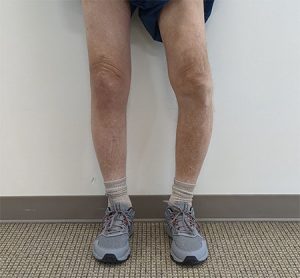
Ray Shail had been suffering with knee pain for over 20 years. The 68-year-old had a congenital deformity that caused him to be significantly bowlegged for much of his life, and as he aged, his knees became extremely painful and severely arthritic. He walked hunched over due to the pain, which also started affecting his hips...
R. Shah | 68 Knee ReplacementChronic knee pain for 20+ years After Treatment
Pain Free Life
Knee Replacement Success Story: Ray Shail
The condition: Ray Shail had been suffering with knee pain for over 20 years. The 68-year-old had a congenital deformity that caused him to be significantly bowlegged for much of his life, and as he aged, his knees became extremely painful and severely arthritic. He walked hunched over due to the pain, which also started affecting his hips and back as well.
Still, Ray was anxious about having a knee replacement and fearful of hospitals. However, when an accident resulted in a broken kneecap, he was seen at the office of Dr. Robert Deveney, a specialist in hip and knee replacement surgery.
The treatment: After an exam and x-rays, Dr. Deveney informed Ray that he would be able to not only replace his knees, thus alleviating his intense pain, but was also able to straighten his legs. This could be achieved, he explained, using the latest robotic-assisted technology in surgery that has proven to be very successful.
When Ray learned about the new technology, and had the option of having the surgery as an out-patient at OrthoConnecticut’s surgical center near home in Danbury, with no hospital stay required, he decided to go ahead with a staged bilateral knee replacement.
Since the leg with the broken kneecap needed some time to heal, Ray’s other knee was operated on first. “The first two weeks weren’t easy,” Ray admits. He was impressed, though, by the fact that a visiting nurse and a physical therapist made home visits starting the day of his surgery.
After two weeks Ray started physical therapy at the offices of Motion, located in the same building at OrthoConnecticut, which was very convenient. On the day of surgery he became mobile with his new knee, and was astonished at how straight his leg was compared to the yet-to-be-operated on leg. And the pain? Completely gone after only six weeks of post-surgical therapy.
This made heading back to surgery three months after the first procedure to replace the other knee much easier. The recovery process on the other knee was similar, and after six more weeks of post-surgery therapy on the other leg, Ray returned to work full time.
The result: “It’s a miracle,” Ray exclaims, describing the difference in his life post-surgery. “My legs are parallel and I have no pain. People say I’m taller now, since I’m not hunched over. They barely recognize me now!” He adds that he now enjoys using the stairs at work, whereas in the past he could only get around using the elevators. He has a new lease on life, and so excited to be so mobile.
“Ray’s story is a testament to how successful robotic-assisted surgery can be,” says Dr. Deveney. “These procedures are more precise, cause less trauma to the soft tissues, and enable patients to recover faster.” Combined with the ability to have out-patient surgery and return home the same day makes joint replacement something patients can feel more comfortable with. “I’m thrilled Ray is no longer suffering,” he adds.
Patient Testimonials
Real stories from patients who found relief and returned to the activities they love.
Ready to Schedule a Consultation?
Take the first step toward better health. Our scheduling team is available to help you find the right provider and convenient appointment time.